


Glycemic Index Explained Simply What It Means and Common Foods to Know
Some foods feel filling and steady. Others seem to give a quick burst of energy, then leave you hungry again an hour later. The glycemic index is one simple tool that helps explain why. If I have a donut or pancakes for breakfast, I am starving 2 hours later!
It does not tell the whole story of a food. No single number can do that. But it can help make sense of how different carbohydrate foods may affect blood sugar after eating. Once the idea clicks, it becomes easier to compare choices like oatmeal and sugary cereal, lentils and white rice, or an apple and a bagel.
This guide explains the glycemic index in plain language, why it matters in everyday nutrition, and how to use it without overthinking every meal.

What the glycemic index means
The glycemic index, often called GI, is a ranking system for foods that contain carbohydrates. It estimates how quickly a food raises blood sugar compared with pure glucose.
The scale usually runs from 0 to 100.
Low GI 55 or less
Medium GI 56 to 69
High GI 70 or higher
Pure glucose has a GI of 100. Foods closer to 100 tend to raise blood sugar faster. Foods lower on the scale tend to raise it more slowly.
Think of it like a speed rating.
A high-GI food is like a fast elevator. Blood sugar rises quickly. A low-GI food is more like taking the stairs. The rise is slower and usually steadier.
Carbohydrate foods include things like:
Bread
Rice
Pasta
Oats
Potatoes
Beans
Fruit
Milk and yogurt
Sweets and sugary drinks
Foods with very little carbohydrate, such as plain chicken, fish, eggs, oils, and most cheeses, usually do not have a meaningful GI value because they do not raise blood sugar in the same direct way.
For a non-medical audience, the main idea is simple: GI helps show how quickly a carb-containing food may turn into glucose in the bloodstream.
This matters because blood sugar is one of the body’s main energy systems. After eating, carbohydrates break down into glucose. The body then uses that glucose for energy or stores it for later. A slower rise often feels more even. A fast rise can be followed by a faster drop, which may leave some people feeling tired, hungry, or snacky.
Why the glycemic index matters in daily eating
The glycemic index can be useful because most people eat carbohydrates every day. Breakfast toast, rice bowls, sandwiches, pasta dinners, fruit, snack bars, cereal, and desserts all contain carbs in different forms.
GI can help answer a common question:
Will this food give me steady energy, or will it hit quickly?
Low-GI foods often digest more slowly. They may help with feeling full and keeping energy more even between meals. Many low-GI foods also bring other helpful nutrients, such as fiber, protein, vitamins, and minerals.
Examples include beans, lentils, oats, apples, pears, and plain yogurt.
High-GI foods digest faster. That does not make them “bad.” It means they may be less steady on their own, especially when eaten in large portions or without protein, fat, or fiber.
Examples include white bread, many sugary cereals, instant rice, baked potatoes, candy, and regular soda.
A helpful way to use GI is to look at patterns, not perfection. If breakfast is usually a sweet cereal and juice, switching to oatmeal with berries may lead to steadier energy. If lunch is white rice with very little else, adding beans, vegetables, and chicken can change how that meal feels.
GI is not a moral score. It is not a ranking of good people and bad foods. It is just one nutrition clue.

Common foods and their glycemic index values
GI values can vary. Ripeness, cooking time, food variety, processing, and even what you eat with the food can change the final effect. A very ripe banana may act differently than a just-ripe one. Soft-cooked pasta may have a different effect than pasta cooked al dente.
Still, common GI ranges are useful for comparison.
Here is a short list of familiar foods with approximate glycemic index values:
Food | Approximate GI | GI category |
Lentils | 32 | Low |
Chickpeas | 28 | Low |
Apple | 36 | Low |
Plain yogurt | 35 | Low |
Spaghetti, cooked al dente | 49 | Low |
Rolled oats | 55 | Low |
Banana | 51 | Low |
Brown rice | 68 | Medium |
White rice | 73 | High |
White bread | 75 | High |
Boiled potato | 78 | High |
Cornflakes | 81 | High |
Watermelon | 76 | High |
A few of these may be surprising.
Watermelon has a high GI, but a typical serving does not contain a huge amount of carbohydrate. That means it may not raise blood sugar as much as the GI number alone suggests. This is where another idea, called glycemic load, can help.
Glycemic load considers both the GI of a food and the amount of carbohydrate in a normal serving. In plain language, it asks: How fast does it hit, and how much carbohydrate is actually there?
That is why watermelon can have a high GI but still be a reasonable fruit choice for many people. It is mostly water. By contrast, a large serving of white rice contains much more carbohydrate, so the total impact can be larger.
The table also shows why food categories can be tricky. Brown rice is often seen as a healthier pick than white rice because it has more fiber and nutrients, but its GI can still fall in the medium range. Whole wheat bread can also have a GI close to white bread depending on how finely the grain is milled and how the bread is made.
That does not mean these foods are useless. It means the full meal matters.
What changes a food’s glycemic index
A food’s GI is not fixed in the way a height or weight is fixed. Several everyday factors can push the effect higher or lower.
Processing often raises GI
The more a grain is broken down, puffed, flaked, or turned into flour, the easier it can be to digest.
For example, steel-cut oats usually digest more slowly than many instant oatmeal packets. Whole fruit usually digests more slowly than fruit juice. A slice of dense, grainy bread may affect blood sugar differently than soft white sandwich bread.
This is because digestion has less work to do when food has already been processed into tiny pieces.
Fiber tends to slow things down
Fiber is one reason beans, lentils, oats, apples, and many vegetables are helpful choices. Fiber slows digestion and can make meals feel more filling.
A simple rule works well: foods closer to their whole form often bring more fiber.
An apple with the peel has fiber. Apple juice has very little. Cooked lentils have fiber. A refined cracker made mostly from white flour has much less.
Protein and fat change the meal
GI is usually measured for a single food eaten by itself. Real meals are different.
A plain baked potato may have a high GI. But if it is eaten with salmon, olive oil, Greek yogurt, beans, or vegetables, the whole meal digests differently. Protein, fat, and fiber can slow the overall rise in blood sugar.
That is why a balanced plate can matter more than memorizing numbers.
Cooking time and texture matter
Softer, longer-cooked foods often digest faster.
Pasta cooked al dente tends to have a lower GI than pasta cooked until very soft. Rice that is sticky and soft may raise blood sugar faster than firmer rice. A mashed potato may act faster than a chunkier potato dish.
This does not mean food has to be undercooked. It just shows how texture can change digestion.
Ripeness can make a difference
Fruit changes as it ripens. A greener banana has more resistant starch. A very ripe banana has more easily available sugar. Both can fit into a healthy pattern, but the riper one may raise blood sugar faster.

How to use GI without making food complicated
The best use of GI is practical. It should make eating easier to understand, not more stressful.
Here are simple ways to apply it.
Choose more low-GI staples
Low-GI foods often make strong everyday basics. Try building meals around:
Beans
Lentils
Chickpeas
Rolled oats
Barley
Plain yogurt
Apples
Pears
Most non-starchy vegetables
Pasta cooked al dente
These foods can help create meals that feel satisfying and steady.
A few easy examples:
Oatmeal with berries and nuts
Lentil soup with vegetables
Plain yogurt with sliced fruit
Chickpea salad with whole grain crackers
Pasta with vegetables and grilled chicken
Pair higher-GI foods with slower foods
There is no need to avoid every high-GI food. Many common foods, including potatoes and rice, can still fit into balanced meals.
The key is pairing.
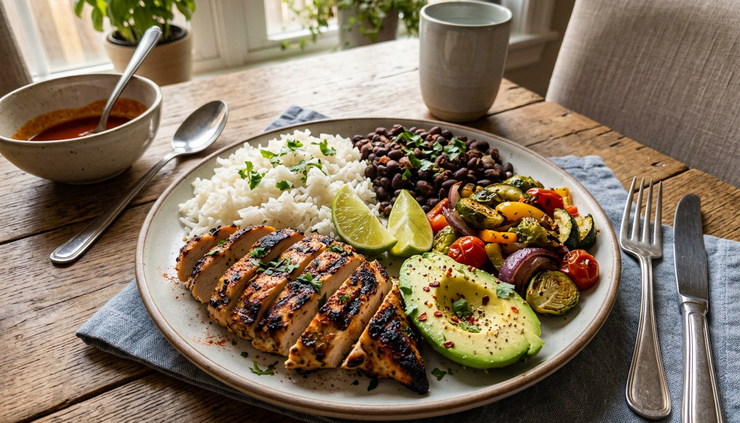
White rice on its own may digest quickly. White rice with black beans, avocado, salsa, vegetables, and chicken is a different meal. Toast with jam may not hold you long. Toast with peanut butter, eggs, or cottage cheese will usually be more filling.
If a meal contains a higher-GI carb, add one or more of these:
Protein
Healthy fat
Fiber-rich vegetables
Beans or lentils
Nuts or seeds
This approach works because the body digests mixed meals more slowly than many single foods eaten alone.
Watch portions without obsessing
Even a lower-GI food can raise blood sugar if the portion is very large. A huge bowl of pasta still contains a lot of carbohydrate, even if pasta has a moderate or low GI when cooked al dente.
Portions do not need to be tiny. Just balanced.
A simple plate can help:
Half the plate with non-starchy vegetables
One quarter with protein
One quarter with a carbohydrate food
A small amount of fat for flavor and fullness
This pattern can work with many cuisines and food preferences.
Keep the joy in eating
Food is not just chemistry. It is culture, comfort, family, budget, taste, and routine.
GI can guide choices, but it should not turn meals into math homework. If a favorite food has a high GI, enjoy it in a balanced way. Add protein. Add vegetables. Choose a smaller portion. Eat it after a meal instead of by itself if that feels better.
The goal is not perfect numbers. The goal is feeling well and making choices that support daily life.
What the glycemic index does not tell you
GI is useful, but it has limits.
It does not tell you how many vitamins or minerals a food has. It does not tell you whether a food is high in sodium. It does not account for the full serving size unless you also think about glycemic load. It does not measure how satisfying a meal is or how it fits into your life.
For example, potato chips may have a lower GI than a baked potato in some cases because fat slows digestion. That does not make chips the more nourishing everyday choice. They are usually salty, calorie-dense, and easy to overeat.
The glycemic index explained simply is a food speed guide, not a complete nutrition report card.
Use it alongside other common-sense questions:
Does this food have fiber?
Does it contain protein?
Is it mostly whole or highly processed?
How large is the portion?
What am I eating with it?
Does it keep me satisfied?
Those questions give a fuller picture.
A simple takeaway for your next meal
The glycemic index helps explain how quickly carbohydrate foods may raise blood sugar. Low-GI foods tend to digest more slowly. High-GI foods tend to digest faster. That can affect energy, hunger, and how balanced a meal feels.
A practical next step is simple: pick one meal you eat often and make it steadier.
Add beans to rice. Choose oats instead of sugary cereal. Pair toast with eggs or nut butter. Eat fruit whole instead of drinking juice. Add vegetables and protein to a potato or pasta dish.
Small changes can make familiar meals more balanced without giving up the foods you enjoy.
All material was gathered and researched through my amazing fellowship program, The Arizona Center for Integrative Medicine.
and


Comments