


Navigating 2026 EWG's Clean 15 and Dirty Dozen: Affordable and Easy Tips for Washing Produce Effectively
- Mar 31
- 5 min read
Updated: Apr 2
Eating fruits and vegetables is incredibly important for a healthy diet, and you shouldn't let worries about pesticide residues stop you, even if organic options seem out of reach! Groceries are expensive enough without beating yourselves up about not always buying organic foods.
Each year, the Environmental Working Group (EWG) unveils two great lists: the Clean 15, featuring produce with the least pesticide residues, and the Dirty Dozen, spotlighting those with the most. These lists are amazing resources for making smart shopping decisions, but remember, they don't mean you have to avoid non-organic produce altogether. The key is to enjoy fruits and vegetables regularly, whether they're organic or conventional!

Understanding the Clean 15 and Dirty Dozen Lists
The EWG's Dirty Dozen list identifies fruits and vegetables with significant pesticide residues, including strawberries, spinach, kale, nectarines, and apples. Opt for organic versions of these if your budget allows.
The Clean 15 list highlights produce with the lowest pesticide residues, including avocados, sweet corn, pineapples, onions, and sweet peas. These items are safe to purchase conventionally while still offering excellent nutrition.
Key takeaway: If you cannot afford organic all the time, focus on buying organic for the Dirty Dozen items and choose conventional for the Clean 15. But don’t skip fruits and vegetables altogether because of pesticide worries. If you check out their website, you can almost always download the list in an easy way to have with you, handy at the grocery store when you shop.
Why Washing Produce Matters
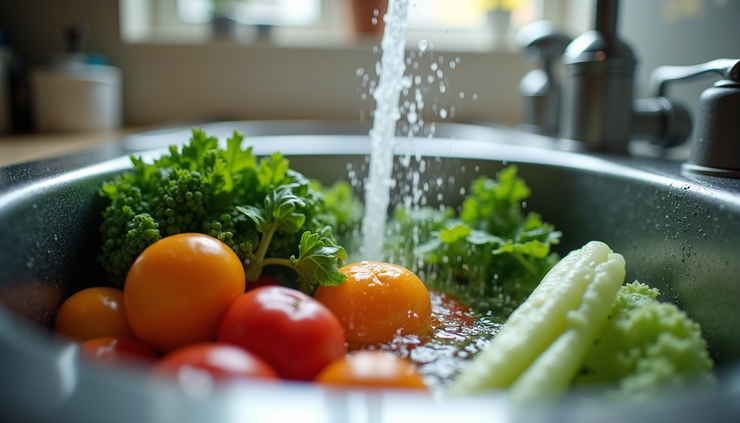
Giving your fruits and veggies a quick wash is an easy way to get rid of pesticide residues, dirt, bacteria, and even some leftover fertilizer. It may not get rid of all the pesticides, but it'll definitely cut down on how much you end up eating.
Many people rinse produce under running water, but some methods work better than others. Using soap or bleach is not recommended because these can leave harmful residues. Instead, there are safe, effective, and easy ways to clean your produce at home.
Affordable and Effective Ways to Wash Produce
Here are some practical tips for washing fruits and vegetables to limit pesticide and fertilizer residues:
Use cold running water: Rinse each item under cold water for 30 seconds to 1 minute. Use your hands or a soft brush to gently scrub firm produce like apples or potatoes.
Soak in a vinegar solution: Mix 1 part white vinegar with 3 parts water in a large bowl. Soak produce for 5 to 10 minutes, then rinse thoroughly with cold water. Vinegar helps break down pesticide residues and remove bacteria. (I often buy the Fruit/Vegetable wash at Trader Joe's in a spray bottle, so it is handy at the sink. It is obviously a vinegar mixture and about the only way I can get my husband to wash his fruit in the morning!)
Baking soda soak: Studies show soaking produce in a baking soda solution (1 teaspoon baking soda per 2 cups water) for 12 to 15 minutes can remove more pesticide residues than water alone. Rinse well afterward.
Peel when possible: For items like apples, cucumbers, or potatoes, peeling can remove residues on the skin. Keep in mind that peeling also removes some nutrients and fiber.
Dry with a clean cloth or paper towel: After washing, drying produce can remove any remaining residues and reduce bacteria.
Balancing Budget and Health
Buying organic produce can be expensive, but it’s not always necessary to buy everything organic. Here are some tips to balance cost and health:
Prioritize organic for the Dirty Dozen items, especially if you eat them often or serve them to children.
Buy conventional for the Clean 15 to save money without sacrificing safety.
Use the washing methods above to reduce residues on all produce.
Shop seasonal and local produce, which can be fresher and sometimes less pesticide-heavy.
Consider frozen fruits and vegetables, which often have fewer pesticides and are budget-friendly.
Final Thoughts on Eating Produce Safely
Eating a variety of fruits and vegetables is one of the best ways to support your health. The EWG’s Clean 15 and Dirty Dozen lists provide useful guidance, but should not discourage you from eating produce if organic is not an option. I
Washing your fruits and vegetables properly can reduce pesticide and fertilizer residues, making conventional produce safer to eat. Simple steps like rinsing under cold water, soaking in vinegar or baking soda solutions, and peeling when appropriate can make a big difference.
Remember, the goal is to enjoy more fruits and vegetables, not less. would rather you eat more fruit and vegetables, regardless of whether they are organic or not. Use the EWG lists as a tool, not a rulebook, and focus on practical, affordable ways to keep your produce clean and your diet healthy.
The 2026 Clean Fifteen
Avocados — Nearly 98% of samples show no detectable pesticides; thick peel provides excellent protection
Sweet Corn — Minimal pesticide residues; note some conventional corn is GMO — choose organic or Non-GMO Project Verified if that is a concern
Pineapples — Tough outer rind prevents most pesticide penetration
Onions — Natural pest resistance means very few chemical applications are needed
Papayas — Low residues; some Hawaiian papayas may be GMO — buy organic if you want to avoid that
Frozen Sweet Peas — Typically very low residues with additional protection from freezing and processing
Asparagus — Naturally pest-resistant; requires very little pesticide treatment
Cabbage — Minimal pesticide use due to natural structural resistance
Cauliflower — Added to the 2025 list; among the safest conventional produce available
Watermelon — Thick rind prevents most pesticides from reaching the flesh
Mangoes — Thick peel shields the fruit from chemical absorption
Bananas — Added to the 2025 list; a staple for babies and toddlers; consistently low residues
Carrots — Root crop grown underground; testing shows consistently very low residues
Mushrooms — Grown in controlled indoor environments with minimal pesticide need
Kiwi — Fuzzy skin provides a protective barrier against residues
The 2026 Dirty Dozen (Updated List)
Strawberries — Consistently number one; nearly all samples test positive for multiple residues
Spinach — Highest pesticide residue by weight of any produce tested; contains, on average, four or more different pesticides per sample
Kale, Collard, and Mustard Greens — Can carry more than 20 different pesticides per sample
Grapes — Thin skin makes them highly susceptible to absorption
Peaches — Soft skin absorbs pesticide sprays easily
Pears — Show residues from both fungicides and insecticides
Nectarines — Consistently test positive for multiple chemical residues
Apples — Heavily treated due to widespread pest and fungal disease pressure
Cherries — Frequently test positive for multiple pesticide residues per sample
Blueberries — Rising contamination rates have secured their place on the list
Blackberries — Added in 2025; 93% of samples had pesticide residues with an average of four different pesticides per sample; cypermethrin, a possible human carcinogen per the EPA, was detected in over half of conventional blackberry samples
Potatoes — Added in 2025; 90% of samples contained chlorpropham, a sprout inhibitor applied post-harvest; averaged two pesticides per sample, the lowest among the twelve
Notable near-misses: Green beans, bell peppers, and hot peppers fell just below the 2026 Dirty Dozen cutoff. However, EWG specifically flagged them because they ranked at the very top for overall toxicity of detected pesticides.


This is such good information! Thank you!